


The complete guide to Memblaze
Published date: 22 April 2026
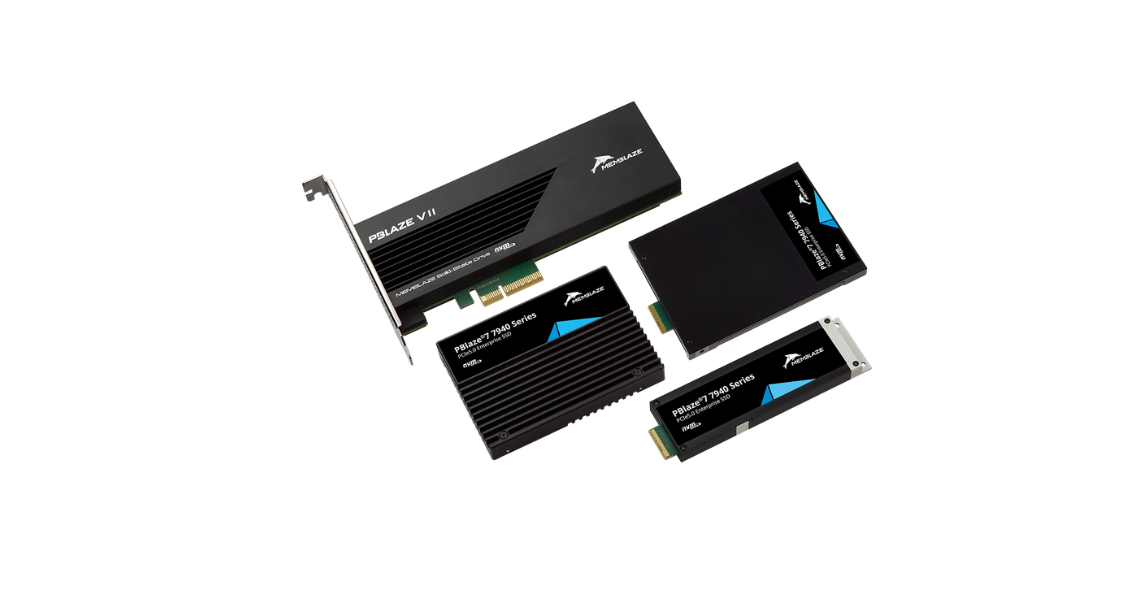
Your servers are choking on outdated SATA SSDs. Your databases crawl when they should fly. And your IT budget bleeds money on hardware that can't keep up with modern workloads.
Memblaze changes everything.
These aren't your typical consumer SSDs dressed up for enterprise use. Memblaze represents a fundamental shift in how we think about flash storage. Built from the ground up for data centres that demand more than "good enough."
In this guide, you'll discover exactly why Memblaze NVMe SSDs are reshaping enterprise storage. From their groundbreaking controller technology to real-world performance benchmarks that will make your current storage look prehistoric.
What you'll learn:
- How Memblaze Technology Works
- Enterprise NVMe Performance Benefits
- Memblaze Product Portfolio
- Implementation and Integration
- Cost Analysis and ROI
- Future-Proofing Your Storage
Memblaze Technology Explained
Traditional SSDs hit a wall. Hard.
While the industry focused on cramming more NAND into smaller packages, Memblaze took a different approach. They rebuilt the entire storage stack from silicon to software.
The secret sauce? Custom controllers.
Most SSD manufacturers buy off-the-shelf controllers and hope for the best. Memblaze designs their own. Every component optimised for one thing: eliminating storage bottlenecks that cripple enterprise applications.
Their PBlaze series uses proprietary firmware that speaks directly to your server's CPU. No translation layers. No middleware overhead. Just raw, unfiltered performance that scales with your workload demands.
Think of it like this:
Your current SSD is like hiring a translator who speaks three languages poorly. Memblaze is hiring a native speaker who thinks in your application's language.
The result? Latency drops from milliseconds to microseconds. IOPS jump from thousands to millions. And your applications finally run at the speed they were designed for.
This isn't marketing fluff. Independent testing by Storage Review consistently ranks Memblaze drives among the fastest enterprise SSDs available. Real performance. Measurable results.
Enterprise NVMe Performance Benefits
Stop accepting mediocre performance. Seriously.
Enterprise applications demand more than your current storage can deliver. Database queries that should take seconds stretch into minutes. Virtual machines that should boot instantly crawl through startup sequences.
Here's what Memblaze NVMe actually delivers:
Random Read IOPS: Up to 3.2 million IOPS on a single drive. Your current SATA SSD manages maybe 100,000 on a good day.
Sequential throughput: 7,000 MB/s read speeds. That's processing an entire HD movie in under a second.
Latency: Sub-10 microsecond response times. Your applications won't even know they're waiting for storage.
But raw numbers only tell half the story.
Real-world performance depends on consistent delivery under load. Consumer SSDs crater when you hammer them with enterprise workloads. Memblaze NVMe drives maintain peak performance even during sustained heavy usage.
Quality of Service (QoS) guarantees ensure your critical applications get priority access to storage resources. No more database slowdowns because someone started a backup job.
Endurance ratings that actually matter in production environments. While consumer drives might handle 150 TBW (Terabytes Written), Memblaze enterprise drives are tested for 17,520 TBW or more. That's over 100x the durability.
The performance gap isn't closing. It's widening. And your competition is already making the switch.
Memblaze Product Portfolio
One size fits none. That's the problem with generic storage solutions.
Memblaze builds different drives for different workloads. Because your database server has completely different needs than your streaming media array.
PBlaze7 Series
The flagship line. Purpose-built for mission-critical applications that can't afford downtime.
Capacities: 800GB to 12.8TB per drive Interface: PCIe 5.0 x4 (backwards compatible) Endurance: Up to 17.52 PBW (that's 48TB written daily for 10 years)
Perfect for primary database storage, high-frequency trading systems, and real-time analytics platforms where every microsecond counts.
PBlaze6 Series
Balanced performance for mainstream enterprise workloads.
Capacities: 960GB to 7.68TB Interface: PCIe 4.0 x4 Endurance: Up to 14 DWPD (Drive Writes Per Day)
Ideal for virtualised environments, cloud infrastructure, and general-purpose enterprise applications.
PBlaze5 Series
Cost-optimised without compromising reliability.
Capacities: 480GB to 3.84TB
Interface: PCIe 3.0 x4 Endurance: Up to 10 DWPD
Smart choice for read-heavy workloads, content delivery networks, and environments where budget matters but performance can't be ignored.
Each series includes comprehensive management software, predictive failure analysis, and enterprise-grade encryption as standard.
Implementation and Integration
Enterprise storage migrations terrify IT departments. And for good reason.
One wrong move and you're explaining to the CEO why the entire business ground to a halt. But Memblaze NVMe integration doesn't have to be a white-knuckle experience.
Start with compatibility verification.
Memblaze drives work with virtually every modern server platform. Dell, HPE, Lenovo, Supermicro—they've all validated these drives in their systems. But verify your specific configuration before ordering.
The staged migration approach:
Begin with non-critical workloads. Test. Measure. Optimise. Then migrate your mission-critical applications once you've proven the performance gains in your environment.
Driver and firmware updates are crucial but often overlooked. Memblaze provides regular updates that improve performance and add new features. Set up automated notifications so you don't miss critical updates.
Monitoring and management tools integrate with existing infrastructure management platforms. SNMP support, REST APIs, and enterprise monitoring integration mean you won't need to learn entirely new tools.
The biggest implementation mistake? Assuming all NVMe drives are the same. They're not. Memblaze drives include enterprise-specific features that consumer drives simply don't have.
According to Enterprise Storage Forum, proper NVMe implementation can reduce application response times by up to 90%. But only if you choose enterprise-grade drives designed for your workload.
Cost Analysis and ROI
"Too expensive" is the default objection to enterprise NVMe.
It's also completely wrong when you do the maths properly.
Total Cost of Ownership (TCO) tells the real story:
Your current SATA SSDs might cost £200 per drive. Memblaze NVMe might cost £800. But that's where most CFOs stop calculating. Big mistake.
Performance density changes everything.
One Memblaze NVMe drive replaces 5-8 SATA drives in real-world performance. Suddenly your £800 investment replaces £1,600 worth of inferior drives. Plus the additional server slots, power consumption, and management overhead.
Power efficiency matters more than you think. NVMe drives consume significantly less power per IOPS delivered. In a 24/7 data centre environment, that adds up to thousands of pounds annually.
Reduced server count is where the real savings hide. When your storage performs 10x faster, you need fewer servers to handle the same workload. Fewer servers mean lower licensing costs, reduced power consumption, and simplified management.
Application performance improvements translate directly to business value. Faster database queries mean happier customers. Reduced backup windows mean extended maintenance windows. Better user experience means higher revenue.
Most organisations see ROI within 12-18 months. The performance gains alone typically justify the investment. Everything after that is pure profit.
Future-Proofing Your Storage Infrastructure
Technology moves fast. Storage decisions last years.
Choose wrong today and you'll be explaining outdated performance to frustrated users for the next five years. Choose right and you'll be the hero who saw the future coming.
PCIe 5.0 adoption is accelerating faster than expected. Major server manufacturers are shipping PCIe 5.0 slots as standard in 2026. Memblaze NVMe drives support the latest standards while maintaining backwards compatibility.
NVMe-oF (NVMe over Fabrics) is reshaping how we think about shared storage. Instead of traditional SAN architectures, you can now share NVMe performance across your entire infrastructure. Memblaze drives are optimised for these emerging architectures.
AI and machine learning workloads demand storage performance that didn't exist five years ago. Training large language models, processing real-time video analytics, running inference engines—all require storage that can keep up with GPU-accelerated computing.
Capacity scaling continues at exponential rates. Memblaze roadmaps show 30TB+ drives arriving within 24 months. Your storage architecture needs to accommodate this growth without complete overhauls.
The organisations winning in 2026 made their storage infrastructure decisions in 2024-2025. They chose Memblaze not just for today's performance, but for tomorrow's challenges.
Frequently Asked Questions
Q: How does Memblaze compare to Samsung or Intel enterprise SSDs? Memblaze focuses exclusively on enterprise storage, while Samsung and Intel serve multiple markets. This laser focus shows in custom controller development and enterprise-specific optimisations that generalist manufacturers often overlook.
Q: What's the warranty coverage for Memblaze drives? Five-year warranty standard across all enterprise lines, with optional extended coverage available. Warranty includes free replacement drives and comprehensive technical support throughout the coverage period.
Q: Can Memblaze NVMe drives work in existing SAN environments? Yes, through NVMe-oF protocols. However, maximum performance requires direct-attached configurations or NVMe-optimised infrastructure. Your existing Fibre Channel SAN may become the bottleneck.
Q: How do you migrate data from existing storage to Memblaze drives? Most organisations use staged migrations with data replication tools. Start with non-critical workloads, validate performance, then migrate mission-critical applications. The process typically takes 2-4 weeks for complete infrastructure transitions.
Q: What's the difference between consumer NVMe and Memblaze enterprise drives? Endurance, consistency, and enterprise features. Consumer drives might achieve similar peak performance but fail under sustained enterprise workloads. Enterprise drives maintain consistent performance and include features like power-loss protection and advanced wear levelling.
Q: Do I need special drivers or software to use Memblaze drives? Standard NVMe drivers work for basic functionality. However, Memblaze provides optimised drivers and management software that improve performance and enable advanced features like predictive failure analysis.
Ready to Transform Your Storage Performance?
The storage performance gap is widening every month.
Your competitors are already migrating to enterprise NVMe. Your applications are already struggling with outdated storage. And your users are already frustrated with sluggish performance.
Origin Storage is the exclusive UK distributor for Memblaze products. We don't just sell drives—we architect complete storage solutions that solve real business problems.
Get your custom Memblaze configuration:
At Origin Storage we'll analyse your current infrastructure, identify performance bottlenecks, and design a Memblaze solution that delivers measurable results.
Download our free Enterprise NVMe Migration Guide for detailed technical specifications, compatibility matrices, and step-by-step implementation workflows.
Don't wait for your storage to fail. Transform it before your competition does.
The future of enterprise storage is here. It's called Memblaze. And it's available right now through Origin Storage.


Comments
There are currently no comments, be the first to comment.